


-
About essentail oil
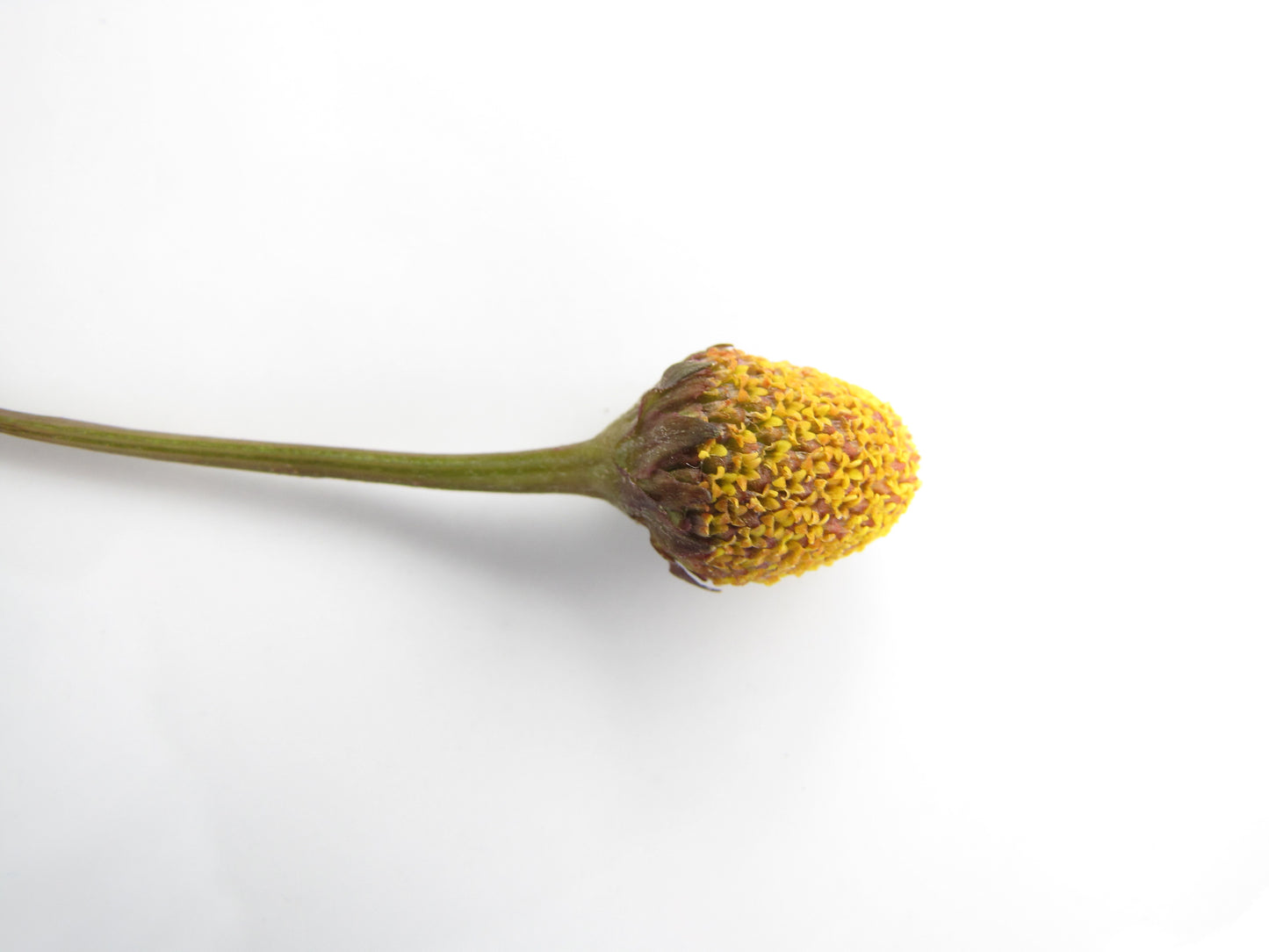
Acmellaは一般的に民俗療法として使用されています。歯痛、リウマチ、発熱、新鮮な野菜と日本の前菜のスパイスとして。シンプルな抗湿球植物から非常に価値のある年間ハーブに至るまで、Acmellaは、ヘルスケア、美容、化粧品、および多くの抗酸化物質が豊富な健康食品やサプリメントの治療法の先住民症の医療として多機能的な役割を果たしていることは非常に魅力的です。南アメリカでよく見られる植物に由来するAcmella oleraceaは、フェイシャルスキンケア製品、特に額や口の周りのカラスの足としわを滑らかにするための完璧な成分です。 -
Safety card
-
Birth certificate of essential oil
ラテン名:Acmella oleracea抽出:Steam distillation使用されている部品:Flowers部品の起源:IndiaCAS:90131-24-1構成要素:Spilanthol香り:Strong, herbaceous, pungent注記:Middle色:Pale yellow to colorless粘度:Thin起源:Indiaディリューション制限:2.0%貯蔵寿命:Approximately 2-3 years -
-
ブレンドと:
Peppermint, rosemary, eucalyptus, sweet orange, lemon, grapefruit -
Quality
100% natural, not diluted and not adulterated essentail oil. It does not contain any other chemical or carrier oil
-
-
利点
 It acts as a muscle relaxant, reducing the micro-movements that create facial wrinkles and lines. This in turn helps to reduce the appearance of lines and wrinkles and visibly smooths the skin’s surface. This smoothing effect is visible and is reinforced over the first month of use.
The anti-wrinkle effect of botulinum toxin lies in its ability to inhibit subcutaneous muscle contractions considered to be responsible for expression lines (deep wrinkles); the substances tested, given their ability to inhibit contractile activity (or botox-like effect), have the same anti-wrinkle potential as botulinum toxin.
Supports oral health and may help relieve toothache
It acts as a muscle relaxant, reducing the micro-movements that create facial wrinkles and lines. This in turn helps to reduce the appearance of lines and wrinkles and visibly smooths the skin’s surface. This smoothing effect is visible and is reinforced over the first month of use.
The anti-wrinkle effect of botulinum toxin lies in its ability to inhibit subcutaneous muscle contractions considered to be responsible for expression lines (deep wrinkles); the substances tested, given their ability to inhibit contractile activity (or botox-like effect), have the same anti-wrinkle potential as botulinum toxin.
Supports oral health and may help relieve toothache -
使用するための提案
Mix 10 drops of acmella with 30 drops carrier oil such as rosehip carrier oil or almond oil or jojoba oil.
Mix 3 drops of acmella with 30 drops carrier oil such as grapeseed carrier oil or almond oil. Within a few seconds, the taste buds, gums, and entire mouth become overwhelmed by the intense tingling buzz, saliva swirling stimulating sensation. Whilst this is happening, the mouth is being cleaned and the gum tissues, lymphatic and immune systems stimulated and strengthened. Do not swallow. -
研究
Study on the potential anti-inflammatory effects of Acmella oleracea extract - full article
Research on the effects of Acmella oleracea extract on oral health - full article
Investigation of the effects of Acmella oleracea extract on skin elasticity - full article
Additional information
The most common and widespread medicinal use is to treat toothache and throat and gum infections. Raw Acmella leaves and flower heads have a pungent taste; they cause numbing of the mouth when chewed and induce the production of saliva. This sensation may be attributed to the alkylamide fraction. Worldwide the flower heads are used either fresh or dried and powdered, but the use of roots and leaves has been recommended as well.Spilanthol is extracted from the Acmella oleracea plant.
Spilanthol offers interesting bioactivities. It is a local anaesthetic and an analgesic and it also has insecticide activities.
Acmella oleracea or Spilanthes acmella is a medicinal plant, also known by the name of Phak-Kratt-Huawaen in Thai. It has long been used in traditional medicine to relieve toothache, headaches, asthma and rheumatism. The decoction of its roots has been used as a laxative and diuretic agent. This plant is composed of Spilanthol but also of isobutylamide derivatives, α-esters and β-amyrin, stigmasterol, myricyl alcohol including sitosterol glucosides and triterpenoid saponins. Studies have shown that the constituents of Acmella oleracea present antioxidant, vasodilatory and antimicrobial activities.
The plant is further recommended as a cure for dysentery and rheumatism, and to enhance the immune system. It is used against blood parasites, especially against malaria.
Regarded as a ‘natural alternative to botox’, Acmella Oleracea is a targeted anti-ageing ingredient. 0.25% Acmella oleracea extract stimulates the contractile force of the fibroblasts (cell/collagen fibre interaction increased), which will help to firm and tighten the dermis. In vivo, Acmella oleracea extracts have been tested on volunteers in a 2% formulation. These results show a perceptible effect on the cutaneous microrelief as of the first day owing to the ultra-fast-working action of the extract (botox-like) and a lasting action after 28 days' treatment. The depth and length of wrinkles are reduced and the skin is smoother and markedly firmer.
Spilanthol offers interesting bioactivities. It is a local anaesthetic and an analgesic and it also has insecticide activities.
Acmella oleracea or Spilanthes acmella is a medicinal plant, also known by the name of Phak-Kratt-Huawaen in Thai. It has long been used in traditional medicine to relieve toothache, headaches, asthma and rheumatism. The decoction of its roots has been used as a laxative and diuretic agent. This plant is composed of Spilanthol but also of isobutylamide derivatives, α-esters and β-amyrin, stigmasterol, myricyl alcohol including sitosterol glucosides and triterpenoid saponins. Studies have shown that the constituents of Acmella oleracea present antioxidant, vasodilatory and antimicrobial activities.
The plant is further recommended as a cure for dysentery and rheumatism, and to enhance the immune system. It is used against blood parasites, especially against malaria.
Regarded as a ‘natural alternative to botox’, Acmella Oleracea is a targeted anti-ageing ingredient. 0.25% Acmella oleracea extract stimulates the contractile force of the fibroblasts (cell/collagen fibre interaction increased), which will help to firm and tighten the dermis. In vivo, Acmella oleracea extracts have been tested on volunteers in a 2% formulation. These results show a perceptible effect on the cutaneous microrelief as of the first day owing to the ultra-fast-working action of the extract (botox-like) and a lasting action after 28 days' treatment. The depth and length of wrinkles are reduced and the skin is smoother and markedly firmer.